Faith Isn’t a Barrier to Therapy — It Can Be a Bridge
Mental health is still pretty stigmatized in communities of faith. Some people feel that if they were to go to therapy, they would be encouraged to compromise their beliefs. Or that it’s a sign that they aren’t praying enough and need to “trust God more.”
So when anxiety lingers, or church hurt still stings, you may wonder if seeking therapy means your faith isn’t strong enough. In my work as a licensed therapist in Florida, I often work with women who have felt that they aren't strong enough in their faith because they have mental health struggles.
But what if therapy isn’t a sign of weak faith at all? What if it’s actually a bridge God uses for healing? Scripture is full of examples of seeking wise counsel. Therapy can be a way for you to receive support while still living in alignment with your faith. In this blog, we’ll explore why faith can sometimes feel like a barrier to therapy, how that belief forms, and how therapy can actually become a bridge to deeper emotional and spiritual healing.

Why Faith Sometimes Feels Like a Barrier
Faith can feel like a barrier to treatment in a lot of ways and may look different for everyone. Here are some examples of how these beliefs might form.
Dismissal/Minimizing
For many Christian women, emotional struggles are immediately spiritualized. Anxiety becomes “a lack of trust.” Depression becomes “ingratitude.” Trauma becomes something you just need to forgive and move on from. When every struggle is reduced to you not doing enough spiritually, seeking therapy can feel like admitting your faith isn’t strong enough. Over time, this message creates shame instead of healing.
Community Dynamics
In some faith communities, vulnerability feels risky. You may worry that sharing your mental health struggles will lead to gossip, spiritual lectures, or being told to serve more and pray harder. When support feels conditional on appearing spiritually strong, therapy can feel like stepping outside of your faith circle, even when you really need a safe space.
“Strength” in Doing it All
For Black Christian women especially, faith is often intertwined with strength, resilience, and caretaking. You’re expected to always hold it all together. Admitting you’re overwhelmed may feel like failing spiritually and culturally. When faith is tied to performance and endurance, therapy can feel like a sign of weakness.
If you’ve experienced spiritual manipulation, spiritual abuse, or church leadership that dismissed your pain, faith itself can feel complicated. You may love God but feel unsafe in religious spaces. In those moments, therapy can feel like betraying your faith by asking questions or questioning the things you’ve experienced. That internal conflict can make reaching out for help feel heavier than it needs to be.
All of these things are completely valid and explain why people would be so hesitant to start therapy. They directly impact your belief system, and even if they don’t feel like a big deal at first, over time, they can definitely add up.
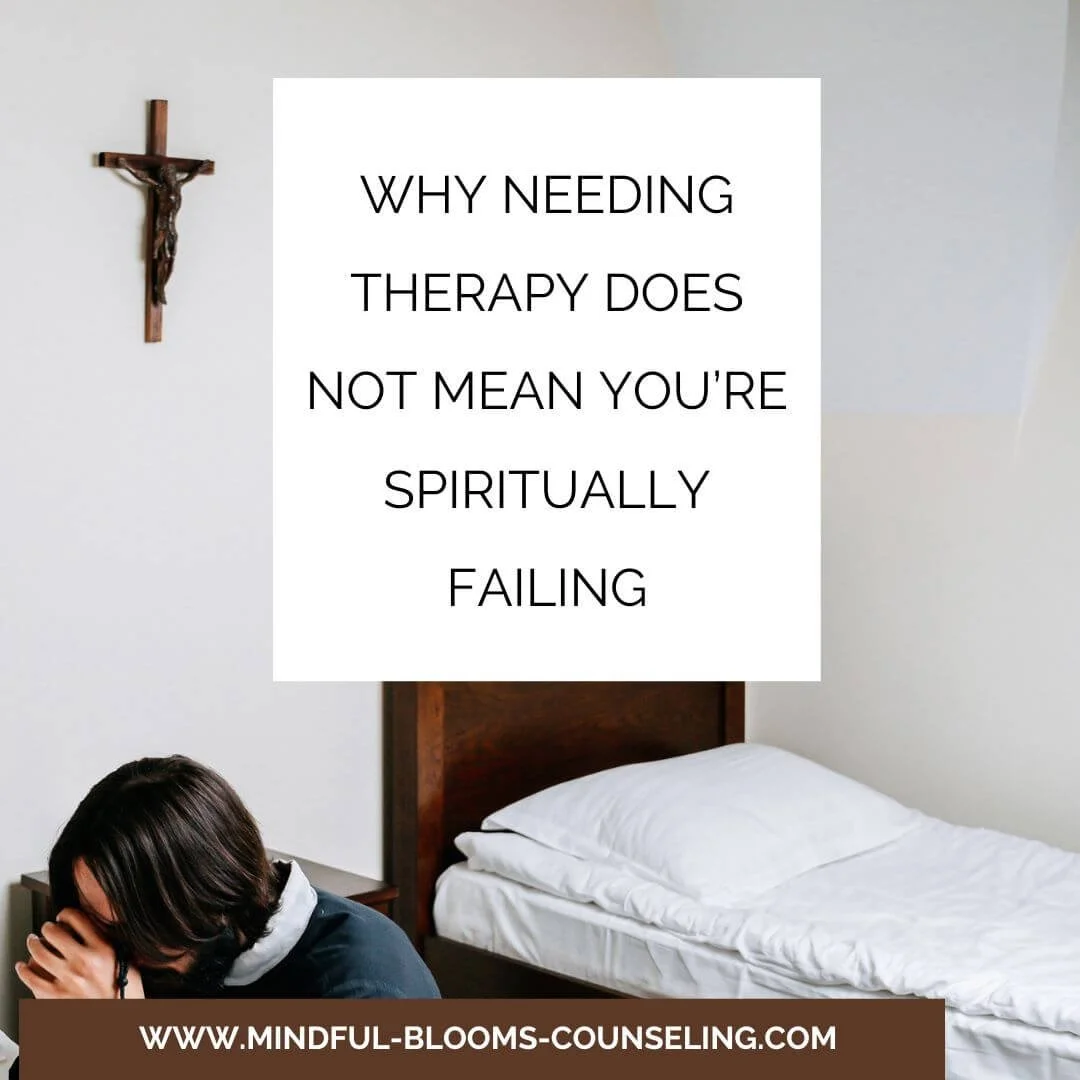
When Faith Becomes a Bridge to Healing
If your body deserves care, your mind does too. Seeking therapy can be an act of taking care of yourself in a way that honors the mind and emotions God gave you. Faith reminds you that you are worthy of care. Therapy helps you practice it. When you see counseling as a way to care for what's going on inside you, it becomes a bridge between belief and action.
Sometimes we think faith means waiting. But often, faith means moving. It means asking for wisdom. It means seeking counsel. It means taking steps toward healing even when it feels uncomfortable. Therapy can be one of those steps by helping you trust that growth and support are part of God’s design for your life.
Faith was never meant to compete with healing. When you believe that God cares about your whole well-being, therapy becomes one more way of caring for the whole person God made.
Prayer can ground you,
Scripture can anchor you,
And therapy can give you tools.
Instead of replacing faith, counseling can help you live it out in practical, emotionally healthy ways.
The Power of Integrating Faith in Therapy
Integrating faith into therapy doesn’t mean turning sessions into Bible studies. It means recognizing that your spiritual beliefs shape how you interpret pain, purpose, identity, and healing. When faith is part of your worldview, it deserves space in the room. Therapy can thoughtfully weave together evidence-based practices with your spiritual values, allowing healing to feel aligned rather than conflicting.
Faith integration can look simple and intentional. It might look like exploring how scripture influences your self-talk. It could mean identifying where spiritual messages have created pressure instead of peace. It could also involve prayer to help ground you or clarify how your values guide decisions. The goal isn’t to spiritualize everything. We want to focus on making sure your beliefs are respected while you build emotional tools.
Common Questions Christians Have About Therapy
Is going to therapy a sign of weak faith?
No. Seeking help is not a lack of trust in God. Scripture encourages wise counsel and community support. Therapy can be one way to receive that counsel.
Shouldn’t prayer be enough?
Prayer is powerful. But prayer and practical support are not opposites. Just as you would pray and see a doctor for physical health, you can pray and see a therapist for emotional health.
What if my therapist doesn’t understand my faith?
You deserve a therapist who respects your beliefs. You can ask questions during a consultation about how they approach spirituality in sessions. If you decide to go with a therapist who isn’t aligned with your faith, they should still be able to respect your spiritual identity.
Will therapy challenge my beliefs?
Therapy isn’t about dismantling your faith. It’s about helping you examine thoughts and patterns that may be harming you, while honoring what matters most to you.
5 Practical Ways to Start Therapy While Honoring Your Faith
If you’re considering therapy but want to stay rooted in your faith, here are practical ways to begin:
Pray for clarity and courage. Ask God to guide you toward the right support and help you to remember that needing help doesn’t make you spiritually weak.
Define your intentions. Journal what you hope to work on, and reflect on what parts of your faith you would like to incorporate into your sessions.
Look for alignment. During consultations, ask therapists how they approach spirituality in sessions and their experience with clients who have similar beliefs and cultural backgrounds as you.
Go slow. Give yourself permission to move at a pace that feels safe.
Stay connected to a healthy community. Therapy doesn’t replace fellowship. If faith spaces feel safe to you, make sure you’re not isolating yourself from your community.

Therapy Can Be a Bridge, Not a Betrayal of Faith
Consider this: what if therapy is one of the ways God answers prayers? It won’t be an instant relief, but with therapy, you’ll receive wise counsel, insight, and a safe space. You won’t have to choose between your faith and your healing.
If you’re ready to explore therapy in a space where your faith is respected, you don’t have to navigate that alone. At Mindful Blooms Counseling, I work with high-achieving Christian women in Florida who want emotionally healthy growth without compromising their spiritual values. Schedule a free consultation call with me, and let’s talk about what healing could look like for you.
Therapy can be one of the bridges that carries you from silent struggle to sustainable peace. And peace is something you were always meant to experience. I encourage you to explore these ways therapy can benefit your life and walk with God!