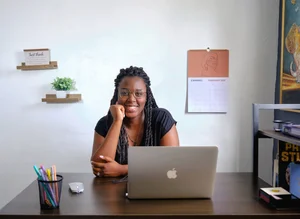
Always the Strong One? The Hidden Cost of Holding Everyone Together
You’re “the strong one”! The one people call when they’re falling apart. The dependable one. The listener. The fixer!
Being “the strong one” can feel like an honor, but over time, it can quietly become a burden.
Because being the strong one often means showing up no matter how tired you are, how heavy life feels, or how much you’re carrying yourself. While this strength is often praised, it can also lead to burnout, isolation, and emotional neglect of yourself.
As a therapist licensed in Florida, I often support ambitious women who feel they must always be strong, even when it comes at the expense of their peace and well-being. Because many women, especially Black women and women of color, are taught early on to be strong. Over time, this expectation can turn into an unspoken role that you might feel pressured to maintain.
While everyone else leans on you, you’re left wondering who you have to lean on when you need support.

Why Do I Always Have to Be the Strong One? Where the Role Comes From.
For many people, the “strong one” role begins long before adulthood. Oftentimes, it starts in families where you have to grow up quickly. If you were the responsible one, the emotional support, or the peacemaker, being the strong one is likely all you’ve ever known.
The expectation to be “the strong one” can also be reinforced by culture and community. Many cultures promote resilience and self-sacrifice as admirable traits. They might be preparing you for the pressures of showing up a certain way and the expectations of others. While it can be done to get you ready for a world that judges you, it can be heavy. It all adds up.
Being the strong one can also develop as a trauma response. Being strong protects you from being hurt again, and it can feel easier to manage.
As you get older, strength might start to feel like the price of connection. If you stop being the one who holds everything together, you may fear losing your place in relationships. Strength might become less about choice and more about survival. Over time, these messages can shape relationships where you are valued more for what you provide than for who you are.
The Hidden Costs of Holding Everyone Together
While being the strong one absolutely has its benefits, it’s important to also talk about some of the hidden costs. Sometimes they’re not obvious, but they can show up in a variety of areas, such as:
Emotional Exhaustion
Always holding the weight of others’ pain
Carrying everyone’s burdens without space for your own
Balancing resentment and feeling like you’re being used
Chronically Minimizing Your Feelings
Staying silent about your struggles because you know other people are going through “worse” things
Feeling like vulnerability is a burden because others rely on you
Isolation
Being surrounded by people but not deeply supported
Feeling like everyone needs you, but no one sees you?
Anxiety & Hyper-Independence
Struggling to ask for help
Feeling like emotions equals weakness
Second-guessing the validity of your emotions
Physical and Mental Health Consequences
Stress, burnout, and compassion fatigue from exposure to the heaviness of others
Depression that looks “high functioning”, but is actually draining.
All of these things can be easy to cover up with a mask at first. You might make excuses for what you're feeling, or keep yourself too busy to really sit with them. Or you might even get to a point where you don’t realize you’re still wearing the mask. So the cycle continues.
Why Asking for Help Feels So Hard
It’s not always easy to explain why asking for help feels so hard. Sometimes it’s just automatic, like you didn’t even realize asking for help was an option, likely because there were times when it wasn’t one.
You might be a high-achiever who’s gotten used to taking care of everything at work, and now you’re worried about “letting the team down.”
Maybe you’ve asked for help before and been disappointed.
Or maybe, part of you believes that if you’re the one who starts to need help, people will leave.
These are patterns I see often in therapy. Especially among ambitious high-achieving women I support through online therapy here in Florida. All of those feelings are valid and explain why asking for help can be so hard, but it doesn't take away from the fact that what you’re doing isn’t sustainable.
How to Know If You’re the Strong One
You don’t have to feel overwhelmed all the time to be considered the strong friend. Sometimes it shows up quietly. In the ways you handle everything alone, minimize your pain, or assume no one else can meet your needs.
You might also be the strong friend if you’re usually the one others call in a crisis, yet they don’t really ask how you’re truly doing. Other signs include difficulty asking for help, feeling guilty when you set boundaries, and believing you need to “have it together” to be valued in your relationships.
It can even show up in your identity and personality. If your sense of worth is tied to being dependable or needed, you might feel uneasy when you can’t fill that role.
Sometimes, what you may initially see as a sign of strength has actually become a mask.
How to Start Healing from Being The Strong One
Letting go of the strong friend role doesn’t happen overnight. Stepping back from fixing everyone else's problems means learning to recognize and prioritize your own needs. Healing can start with small, intentional shifts like:
Being honest about how much you can actually take on
Saying no without overexplaining
Finding safe people you can lean on
Learning to receive support
Setting boundaries without guilt
Allowing yourself to rest without earning it first
Treating yourself the way you treat others in your life
Over time, these changes help create relationships rooted in mutual care and give you the support and recognition that you deserve.
How Therapy Can Help
The strong one often comes to therapy when they notice that no matter how much they show up, support others, or give advice, things don’t actually improve. Instead of questioning the role itself, they question themselves. They may not recognize that they minimize their own exhaustion because they’re used to pushing through.
At my practice, Mindful Blooms Counseling, therapy is a space where you’re not expected to hold it together. Many of the high-achieving women I work with don’t look burned out on the outside, but feel constantly on edge and secretly struggle. Therapy with me helps address high-functioning anxiety, emotional exhaustion, and the pressure to always be “on”. This is a place where your doubts and unspoken feelings are welcome without judgment or pressure to keep performing.
When The Strong One Finally Gets Held
Being the strong one may have helped you survive, connect with others, or support them, but it shouldn’t come at the cost of your own well-being. There are other ways to be strong, and you deserve relationships where care flows both ways and spaces where you don’t have to hold everything together.
Strong friends and high achievers are often the last to receive care. Being the strong one often means waiting until you’re completely depleted before asking for help. You don’t have to wait that long anymore.
Mindful Blooms Counseling is a Florida-based therapy practice for ambitious women who pursue meaningful success while protecting their peace, confidence, and emotional well-being. If you’re a high-achieving woman in Orlando or anywhere in Florida looking for therapy and ready to start prioritizing your own needs, schedule a free consultation, and let yourself receive support for once.